

Mystic Flowers participated in SiFlor 2025, the most important floriculture conference of the year, while exploring the future of the industry through technology, sustainability, and innovation.
This year’s central theme was the transition toward a 4.0 Floral Industry, where data, automation, and interconnected systems are becoming essential for competitiveness and long-term growth.
Our Production Manager, Rosanela Jiménez, was invited as a featured speaker during the closing panel as a recognition of our ongoing leadership and commitment to the future of floriculture.

Leading the Conversation: Technology, Data & the Future of Production
During the panel, Rosanela shared insights on how technological integration is reshaping the way flowers are grown, monitored, and managed.
She explained how the industry is entering a stage where tools such as:
- Environmental sensors (temperature, humidity, soil moisture)
- Degree-day tracking for crop development
- Digital phenological monitoring using QR codes
- Meteorological stations inside the farm
- Cloud-based irrigation systems
…will become foundational for production efficiency, consistency, and long-term planning.
Today, most tools in farms still operate independently, with separate devices, apps, and datasets. The challenge and opportunity ahead lies in integrating all production data into a unified, real-time ecosystem, enabling more accurate decision-making across the entire organization.
This vision aligns perfectly with the industry’s evolution toward predictive modeling, where climate conditions, soil behavior, and growth cycles interact to forecast production more precisely.
How Mystic Flowers Is Moving Toward Industry 4.0
At Mystic, innovation is part of our DNA. We have already implemented several of these technologies across our farms, including:
Soil & Climate Sensors
Devices that capture real-time information such as soil moisture, temperature, humidity, and degree-days, enabling smarter irrigation and crop management.
Digital Growth Tracking
Using QR codes, our team monitors daily phenological development, helping build predictive models for each variety.
Meteorological Stations
Installed across farms to provide environmental data that supports real-time decision-making, despite current limitations in internet coverage across all blocks.
Cloud-Based Irrigation (Coming 2026)
Our next step is migrating irrigation systems to the cloud so engineers can monitor and adjust watering strategies instantly, based on sensor data.
These tools not only modernize operations but also increase plant health, optimize water usage, and boost production accurancy.

A Significant Milestone in Sustainability
Beyond technological innovation, Mystic Flowers also reached an important environmental achievement.
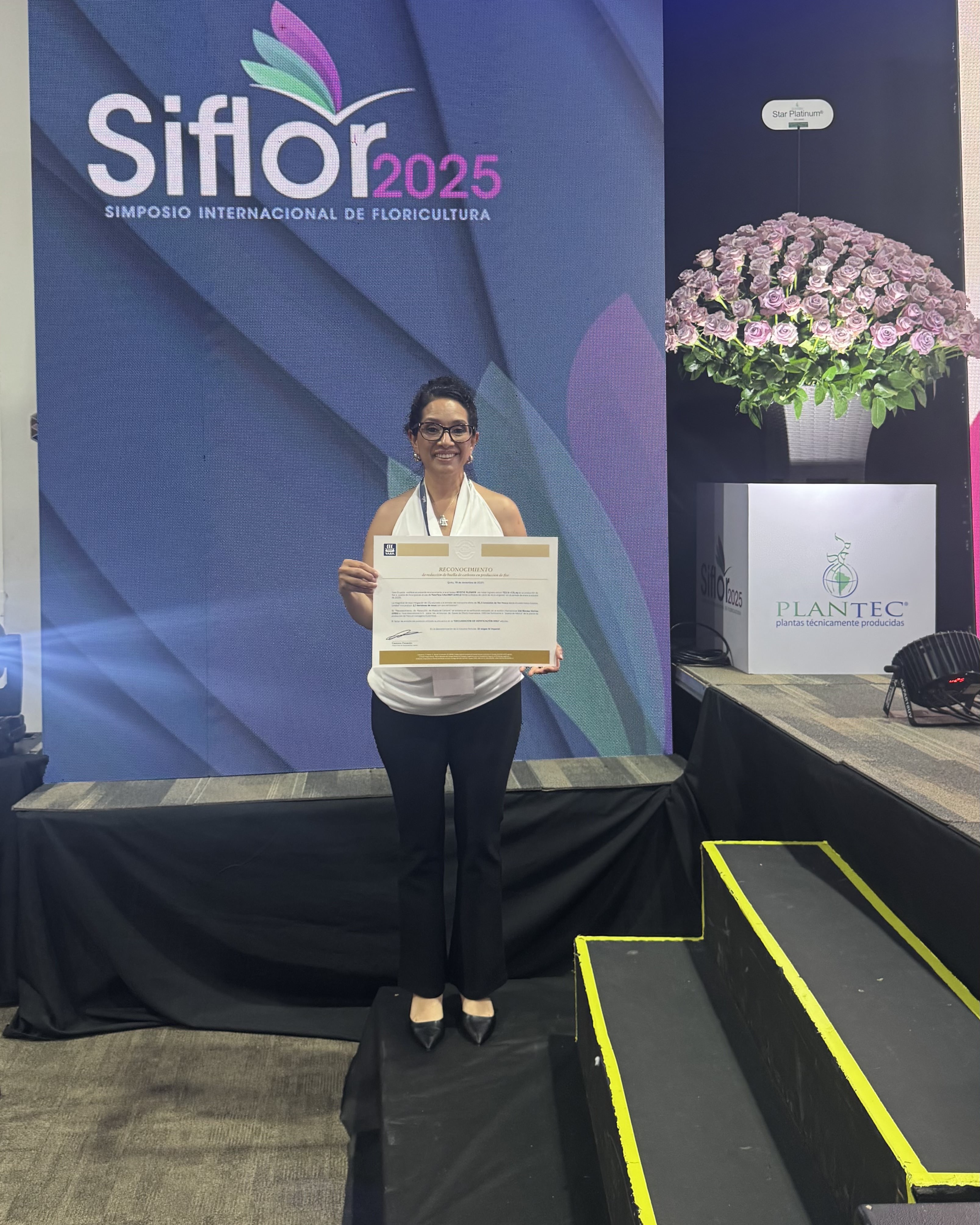
In collaboration with ProFlower and fertilizer manufacturer Yara, we reduced 122.5 tons of CO₂e in our production. This is a major step in minimizing one of the industry’s most significant environmental impacts: fertilizer emissions.
Yara’s low-impact manufacturing technology reduces the environmental footprint associated with calcium nitrate production, making this shift a meaningful contribution to sustainable floriculture.
This recognition, received for the second consecutive year, eaffirms our commitment to responsible, future-ready production practices.
Why This Matters for the Floral Industry
The evolution toward a 4.0 Floral Industry is not simply about adopting technology. It’s about building:
- More consistent and predictable production
- Higher reliability for wholesalers and retailers
- Sustainable processes with lower environmental impact
- Better integration between climate, plant behavior, and human expertise
- A unified data ecosystem that benefits the entire value chain
Mystic Flowers is proud to contribute to this transformation, combining human expertise, advanced technology, and sustainability to shape a stronger, more resilient floral industry.
Looking Ahead
Our participation in SiFlor 2025 reinforces our long-term mission: to lead with knowledge, innovate with purpose, and adopt technologies that elevate the quality and sustainability of every flower we grow.
We extend our gratitude to Expoflores for organizing such a valuable event, and we look forward to contributing to the next chapter of the floriculture industry.